Emergency Water Heater Repair in Aurora, Colorado
A flooded utility closet or a cold shower on a January morning doesn't wait for business hours, and neither do we. A licensed technician answers our after-hours line directly, walks you through shutting off water or gas over the phone, and gets to your Aurora home fast.
- 24/7 live dispatch
- 60–90 min response
- Licensed technicians
- Trucks stocked for same-day swaps
- Upfront after-hours pricing
- Xcel-coordinated gas safety
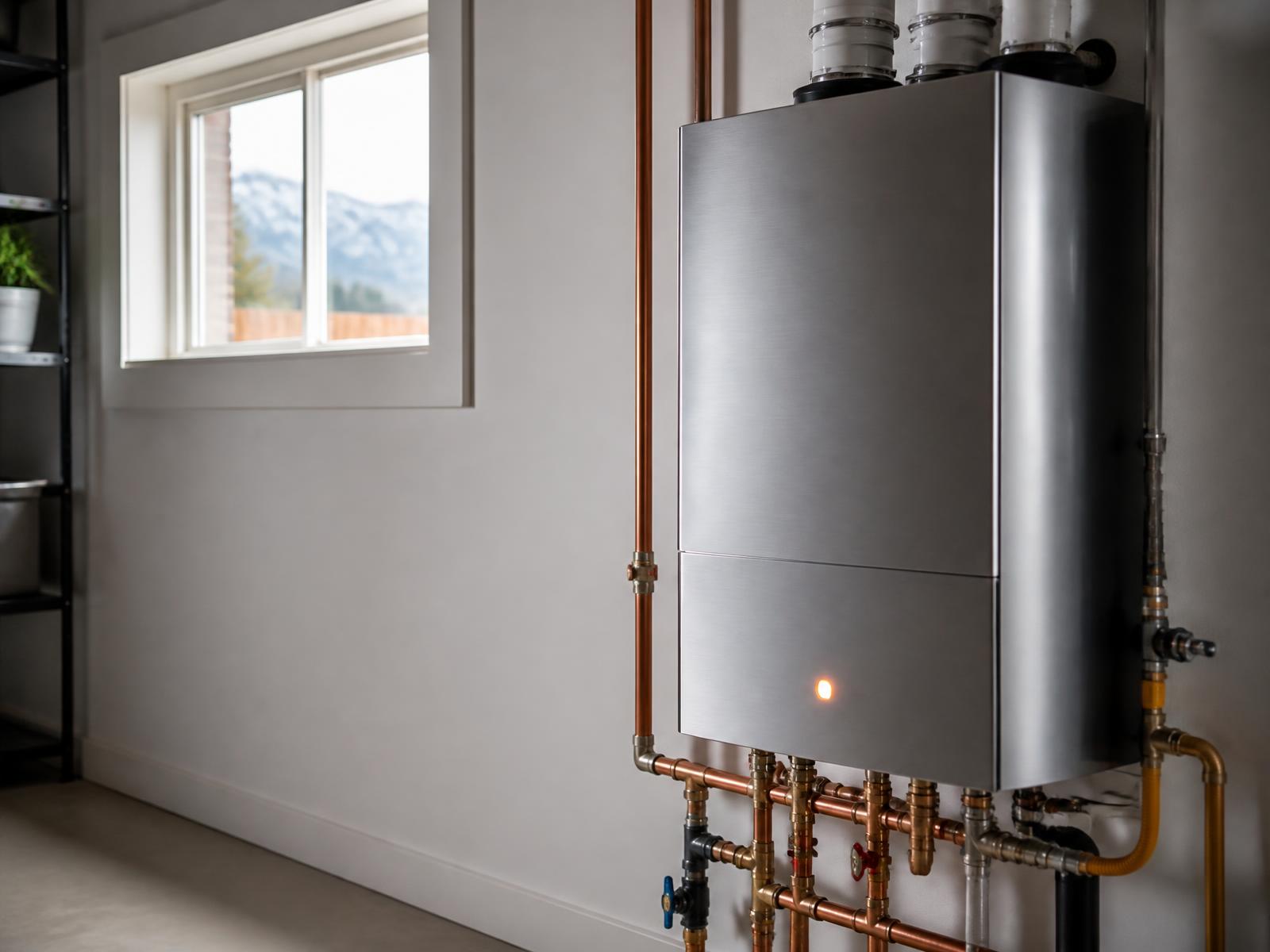
What to Do in a Water Heater Emergency
Water heater emergencies in Aurora rarely give advance notice. A tank that's been quietly building sediment for years finally rusts through overnight, or a heating element fails on the coldest week of the year when your incoming water is barely above 40 degrees. Whatever the cause, the priority is the same: stop the damage, restore hot water safely, and do it without a homeowner getting stuck paying for guesswork.
We built our after-hours line so a real, licensed technician picks up — not a national answering service reading from a script. That technician can tell you within minutes whether your situation is a true emergency that needs a truck tonight, or something that can safely hold until morning, and either way you get a straight answer instead of a sales pitch.
This page covers what actually qualifies as an emergency, what it costs to fix one in the Denver metro after hours, and what to do in the first five minutes after you discover a leak, a gas smell, or a tank that's gone completely cold.
What emergency service actually means
Emergency water heater service is dispatch outside our normal Monday–Saturday, 7a–7p window, or same-day response to an active safety or property-damage situation during the day. It's built around speed and triage, not around selling you a bigger job than you need.
Every emergency call starts with a phone assessment. We ask what you're seeing — active water, a smell, a sound, or simply no hot water — and use that to decide how urgently to move and what parts to bring on the truck so the first visit can also be the last one.
Because Aurora spans everything from 1950s slab-on-grade ranches near Colfax to finished basements in Painted Prairie, the access and shutoff situation is different in every home, which is exactly why we talk you through your specific setup before a truck even leaves the shop.
Phone triage first
We assess severity on the call so you know what to do in the next five minutes, before a technician even arrives.
Stocked trucks
Common Aurora-market tanks, altitude-rated gas controls, and standard parts are carried on every emergency vehicle.
Coordinated with the utility
For gas odor or suspected leaks, we work directly with Xcel Energy's response rather than working around it.
One visit, honest scope
We fix what's actually broken and tell you plainly if replacement makes more financial sense than another repair.
Common Water Heater Emergencies in Aurora
These are the situations that generate the overwhelming majority of our after-hours and same-day calls across Aurora.
Tank rupture or active leak
A corroded seam or cracked tank body releasing water continuously, often discovered by sound or a spreading puddle in a garage or basement.
Complete loss of hot water
A failed heating element, dead gas control valve, or tripped high-limit switch that leaves the household with no hot water at all, usually during the coldest stretch of the year.
Gas odor near the appliance
A rotten-egg smell around the water heater or its gas line, which requires leaving the house and calling Xcel Energy before calling us.
Pressure relief valve discharging
Water or steam venting continuously from the T&P valve, a sign of dangerous pressure or temperature buildup inside the tank.
Popping, rumbling, or banging tank
Loud internal noise from thick sediment overheating at the bottom of the tank, which can precede a burst if ignored.
Water heater flooding a finished space
Common in Southlands, Beacon Point, and Blackstone homes where the tank sits in a finished basement mechanical room with limited drainage.
Signs You Need Emergency Water Heater Service
Recognizing these signs early is the difference between a controlled shutdown and a flooded utility room.
- Water pooling at the base of the tank or trailing from a fitting
- Rotten-egg or sulfur smell near the appliance
- Rumbling, popping, or banging sounds from inside the tank
- Water that runs cold and never recovers
- Rusty or metallic-smelling water at the tap
- Visible corrosion, bulging, or rust streaks on the tank shell
- The pressure relief valve dripping or spraying continuously
- A pilot light that won't stay lit or a burner that won't ignite
- A breaker that repeatedly trips for the water heater circuit
- Sudden, unexplained spikes in your water bill
Why Water Heaters Fail Without Warning
Most emergencies trace back to a small handful of causes that are common across Aurora's housing stock.
Sediment buildup from hard water
Aurora Water's supply, sourced through the Prairie Waters Project, is clean but hard, and mineral sediment settles at the bottom of the tank, insulating it and accelerating heating-element and burner wear.
Tank age past its service life
Most standard tanks last 8 to 12 years; homes in Hoffman Heights, Del Mar Park, and Highline Villages often have original or long-overdue units well past that mark.
Anode rod fully consumed
Once the sacrificial anode rod is depleted, the tank itself begins corroding from the inside, and failure typically follows within a year or two.
Cold-weather demand spikes
Incoming water in the low 40s from November through March forces the unit to work far harder to hold temperature, which is why most catastrophic failures cluster in winter.
Undersized or aging expansion tank
A missing or waterlogged thermal expansion tank lets pressure spike on every heating cycle, stressing the tank, fittings, and T&P valve.
Improper installation or venting
Older garage and closet installs, especially in tight 1950s–60s floor plans, sometimes lack the combustion air or clearance current code requires, which becomes a safety issue over time.
Emergency Repair and Replacement Options
The right fix depends entirely on what's failed and how old the unit is — here's the full range we bring to an emergency call.
Heating element or thermostat replacement
The most common electric-unit repair, usually resolved in under an hour once diagnosed.
Gas control valve or thermocouple replacement
Restores ignition and temperature control on gas units without requiring a full tank swap.
Pressure relief valve replacement
A quick, inexpensive fix that eliminates a serious pressure-related failure risk.
Tank flush and sediment removal
Clears buildup that's causing noise, reduced capacity, or premature element failure — often paired with an emergency repair to prevent a repeat call.
Emergency same-day tank replacement
When the tank itself has failed, we install a properly sized, altitude-rated replacement from stock the same day.
Expansion tank and code corrections
Adding or replacing an expansion tank and correcting venting or clearance issues so the system passes current code.
Repair now, or replace tonight?
An honest emergency call tells you which path actually makes sense before any work starts.
Repair usually makes sense when
- The tank itself is structurally sound with no corrosion or leaks from the shell
- The unit is under 8 years old
- The failure is isolated to one component — an element, valve, or thermocouple
- You've had the tank flushed within the last year or two
Replacement is the smarter call when
- Water is leaking from the tank body itself, not a fitting
- The unit is past 10–12 years old
- You've had more than one repair in the past 18 months
- The tank shows visible rust, bulging, or corrosion
Our rule of thumb
How Our Emergency Response Works
Here's what happens from the moment you call to the moment your hot water is back.
- 1
Phone assessment
We ask what you're seeing and hearing, help you shut off water or gas safely, and determine dispatch priority.
- 2
Dispatch and ETA
You get a real arrival window, typically 60 to 90 minutes for true emergencies anywhere in Aurora's ZIP codes.
- 3
On-site diagnosis
The technician confirms the cause, checks gas or electrical safety, and explains findings in plain language before any work begins.
- 4
Upfront pricing
You get a firm quote, including the after-hours premium if applicable, before we touch the unit.
- 5
Repair or replacement
Most repairs and stocked-tank replacements are completed the same visit, using parts carried on the truck.
- 6
Safety check and cleanup
We test for leaks, confirm proper venting and pressure relief operation, and leave the work area clean before we go.
Emergency Water Heater Repair Cost in Aurora
After-hours pricing includes a dispatch premium on top of standard repair or replacement costs, and we quote it before we dispatch.
| Scope of work | Typical range |
|---|---|
After-hours dispatch fee Added to the standard service call fee for nights, weekends, and holidays. | $75 – $150 |
Heating element or thermostat repair Includes parts, labor, and the after-hours premium. | $300 – $500 |
Gas control valve or thermocouple replacement Common emergency fix for gas units with no ignition or heat. | $350 – $650 |
Pressure relief valve replacement Addresses continuous discharge or dangerous pressure buildup. | $225 – $375 |
Emergency tank replacement, 40–50 gal Includes new altitude-rated tank, expansion tank if needed, and code corrections. | $1,700 – $3,400 |
Water extraction / flood mitigation referral For significant flooding we coordinate with a trusted restoration partner in addition to the repair. | Varies |
Why the range is a range
- Prices reflect typical Denver-metro after-hours rates and can vary based on tank size, fuel type, and access.
- We always quote the after-hours premium separately and clearly so it's never buried in the final invoice.
- Financing is available for emergency replacements so a failed tank doesn't have to be an unplanned lump-sum expense.
Why Call a Dedicated Emergency Line
Calling a dedicated emergency line — instead of waiting for a general contractor's morning callback — pays off in a few concrete ways.
Real technician, not a script
You talk to someone licensed who can actually assess your situation, not a call-center operator reading questions off a card.
Damage stops sooner
Faster response means less water damage to flooring, drywall, and finished basements.
No guessing on price
You know the after-hours premium and repair estimate before any work starts, not after.
Same-day resolution
Stocked trucks mean most emergencies, including full tank swaps, are resolved in a single visit.
Preventing the Next Emergency
Most emergency calls are preventable with a few habits that take less than 30 minutes a year.
Because Aurora's municipal water is hard, sediment is the single biggest driver of premature tank failure and after-hours calls in this market. An annual flush significantly extends the life of both gas and electric units and reduces the odds of a winter breakdown.
Knowing where your shutoff valves are, and testing the T&P valve once a year, means you're never scrambling to find them during an actual emergency — and that alone can be the difference between a small mess and a flooded basement.
- Flush the tank annually to clear sediment buildup
- Test the pressure relief valve once a year
- Inspect the anode rod every 2–3 years and replace when consumed
- Know the location of the cold water shutoff and gas or breaker shutoff
- Keep the area around the water heater clear of stored items
- Set the thermostat to 120°F to reduce strain and scald risk
- Watch for rust, moisture, or corrosion at the base of the tank
- Schedule a professional inspection before winter each year
Emergency Water Heater Repair Questions
Related Water Heater Services
Water Heater Repair
Standard-schedule diagnosis and repair for issues that aren't an active emergency.
Read moreWater Heater Replacement
Planned tank replacement, sizing guidance, and installation across Aurora.
Read moreTankless Water Heaters
Endless hot water and a smaller failure footprint compared to a traditional tank.
Read moreWater Heater Maintenance
Annual flushing and inspection plans built to prevent the emergencies covered on this page.
Read moreHot water emergency right now? Call before it gets worse.
A licensed technician answers 24/7, not an answering service. Tell us what you're seeing, and we'll get a truck moving toward your Aurora home.